
Blog
19 February 2026

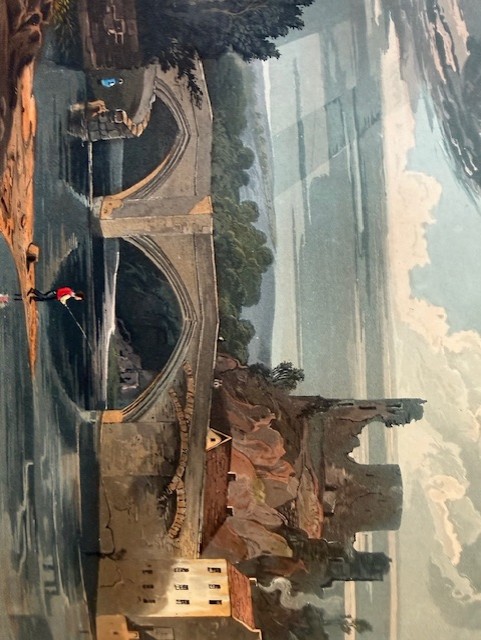
'An Englishman’s Home is his Castle’ makes both a serious and a humorous point. If castles are massively fortified, and designedly impregnable, residential strongholds, then this serves to emphasize how an ordinary home, in the eyes of its proud owner, may be seen with satisfaction as its own kind of protected space, a sanctum, private and secured against the world’s unwelcome intrusions. Yet most people’s modest homes and their comforts are ironically unlike most perceptions of a castle. What are the associations around castles, which have been a continuing presence in the British landscape for nearly a thousand years? In Britain, stone-built castles are essentially a creation of the Middle Ages, and in England a consequence of the Norman Conquest. Although there were fortified English towns before 1066 (some re-using Roman walls), it was the Normans who introduced castles to dominate strategic locations and serve as the strongholds of an imposed new nobility of Norman origins. Perhaps at some deep level castles remained symbols of a subjugation that – it might be fondly supposed – had not always been present.
By the time that medieval castles came to be depicted in Emmanuel’s collection of eighteenth- and nineteenth-century illustrated books, most had long been in a ruinous state of variously picturesque decay. In T. H. Fielding’s British Castles: A Compendious History of the Ancient Military Structures of Great Britain (1825) rampant vegetation scrambles over various castle ruins, half-absorbing them back into the natural landscape – so different to the current presentation of ruins, stripped of ivy in manicured lawns.
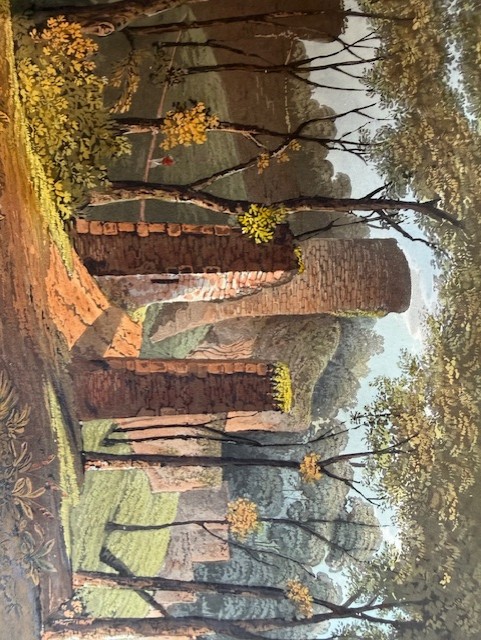
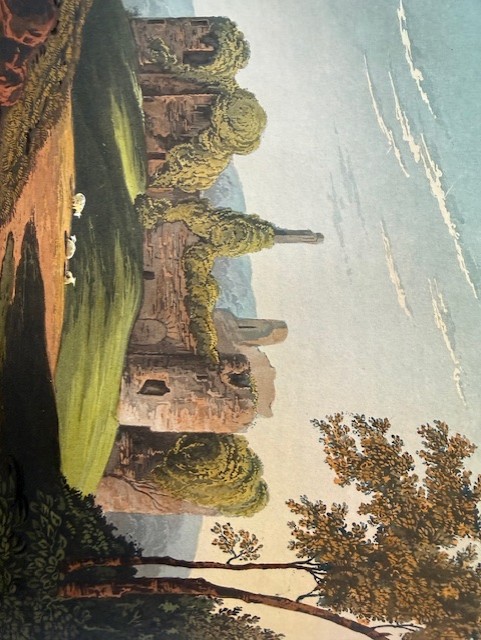
Such decaying castle ruins offered a focus for romantic constructions of the past. But castle ruins prompt reflections interestingly different from those prompted by the other great category of ruined medieval building in the British landscape: the ecclesiastical ruins laid waste at the Dissolution of the Monasteries. To the latter usually attaches a lingering nostalgia for otherworldly beauty and order that were irretrievably lost during one short, brutal oppression. Castles have more mixed, this-worldly associations: both defensive and offensive, both bases and objects of assault; places of sanctuary and refuge, but also of constraint and imprisonment. Increasingly obsolete in their original military purpose, but they long remained evocative of local power and control, often serving as prisons.
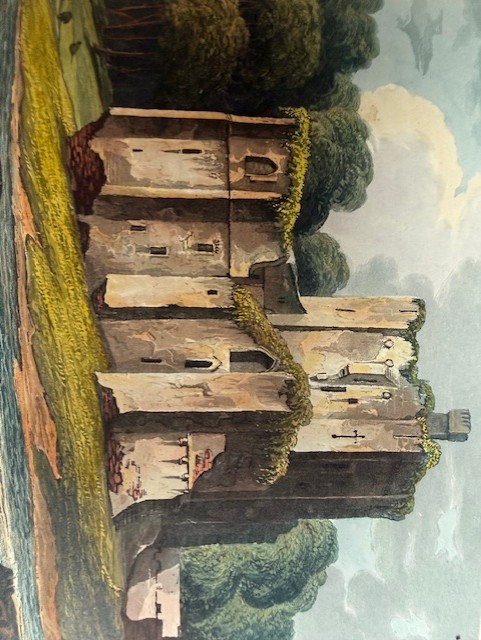
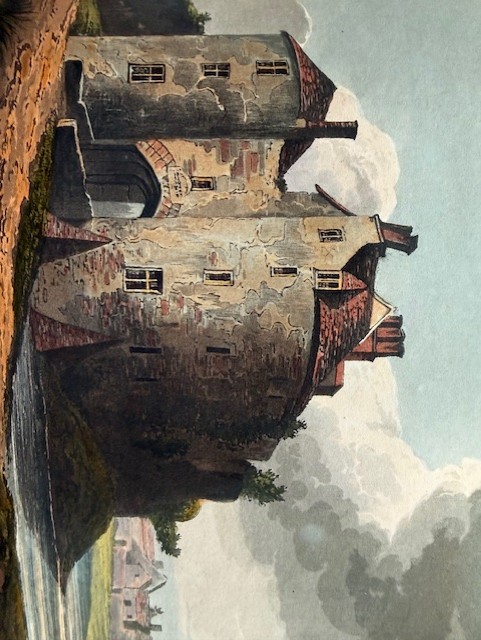
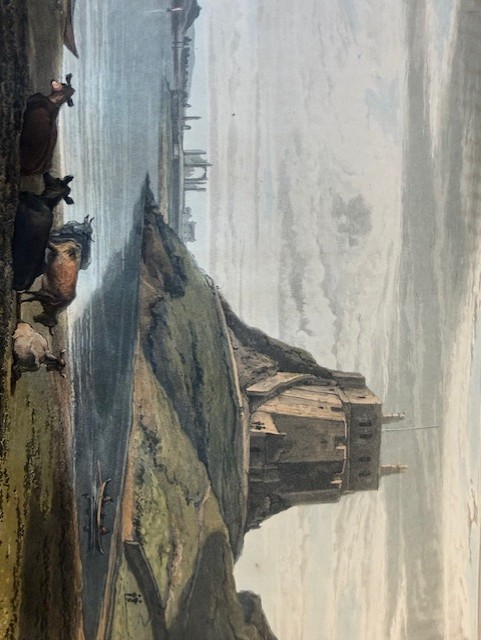
For the Swiss psychologist Carl Jung (1875-1961) the castle symbolized the human psyche as an inner stronghold, with its stout walls representing boundaries between the individual and the outer world. It is tempting to recall this conception in depictions of castles as full-square masses like Goodrich Castle, or the dominant masses of Thirlwall Castle and Lindisfarne seen against the skyline. Such castles, as intended, project power in both their situation and their containment.
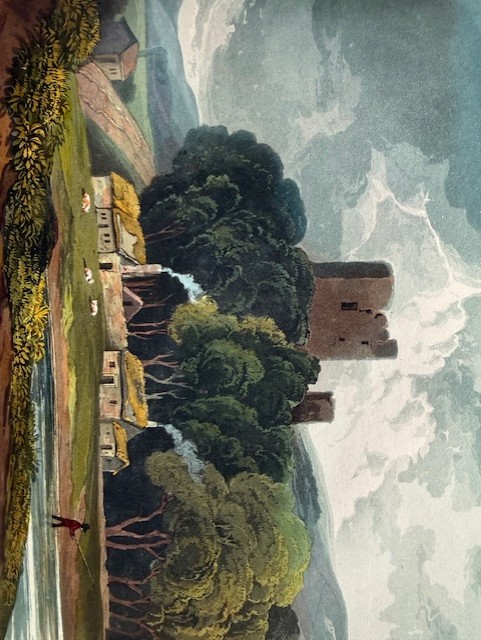
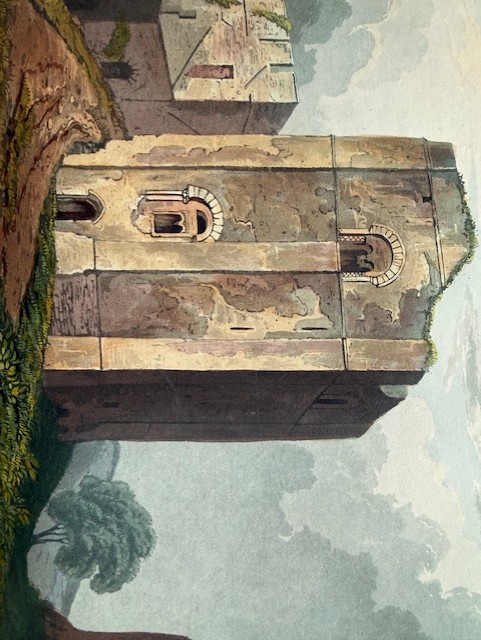
In the Welsh landscape the formidable castles built by Edward I (like that at Flint, shown here beside tumultuous seas) continued to symbolize English dominion long after their own strategic contribution had passed, but Welsh rulers also built stone castles, as did Llywelin the Great at the strategic point of Dolwyddelan in Snowdonia, depicted by Fielding in all its lonely splendour.
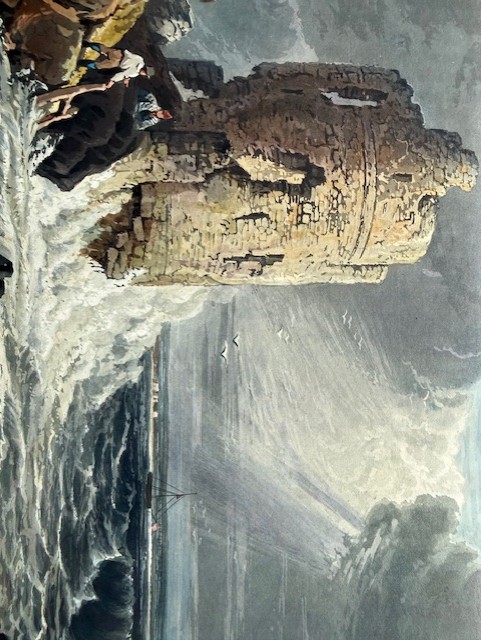
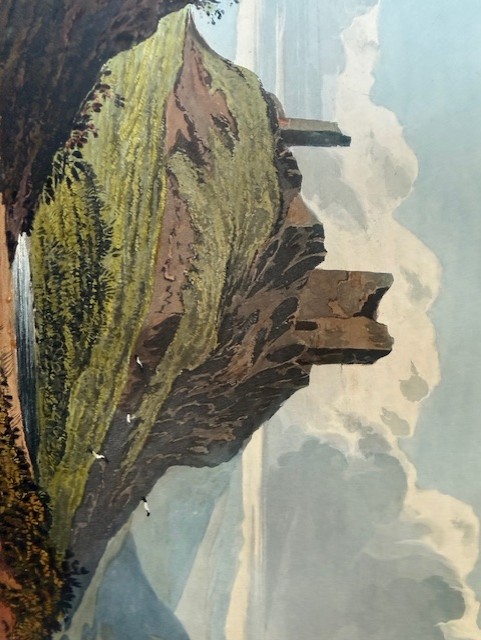
From the Isle of Man to the Hebrides, artists were depicting the strong vertical lines of surviving castle towers and turrets set in lonely expanses of coastline or perched on vertiginous cliffs.
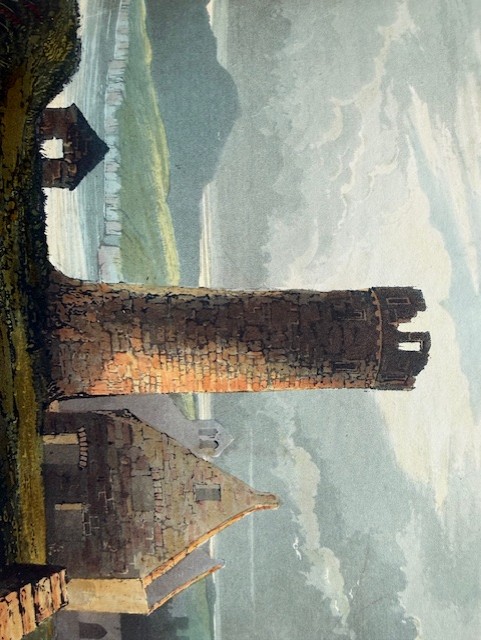
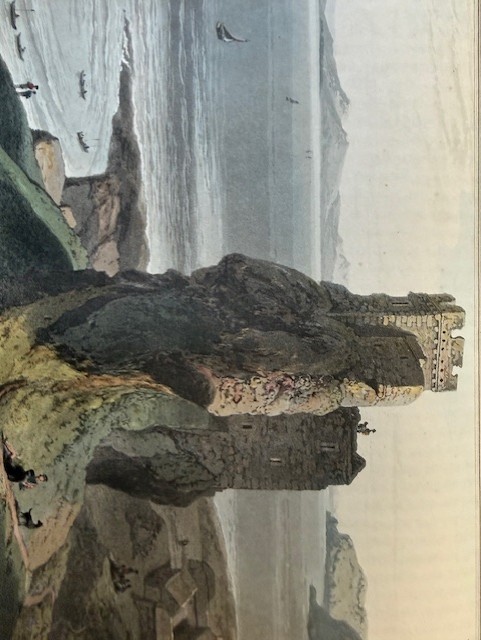
But in his archetype of the castle as a symbol of the self, Jung saw the castle structure as representing levels of awareness, where the castle’s dark, deep spaces – cellars, dungeons, steeply descending staircases and deeply excavated foundations – might represent the collective unconscious and very ancient shared human history. Fielding shows the ruined inner courtyard of Edward I’s Beaumaris Castle on Anglesey as dark and gloomy, while a contemporary account of Windsor Castle focusses on a seemingly endless ‘Ancient Staircase’ within the Round Tower.
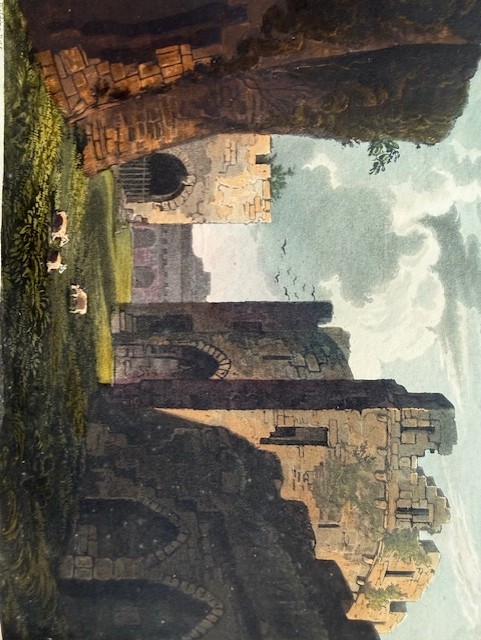
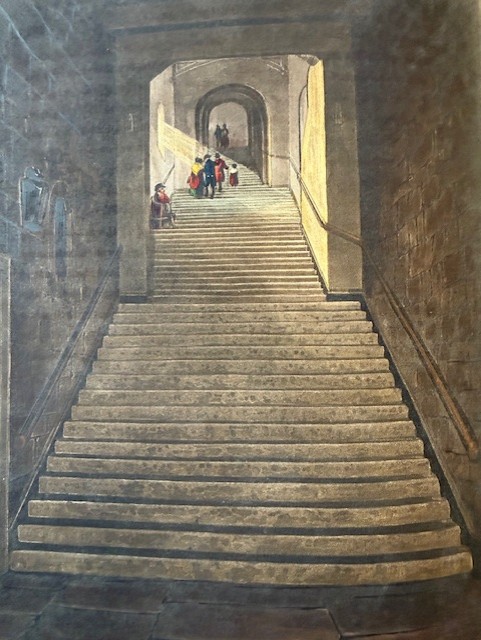
If twentieth-century psychologizing seems a long way from the ruined British castle, it is perhaps no coincidence that in the heyday of medieval construction of imposing stone castles, medieval authors were composing works in which imaginary castles in romances and spiritual works were interpreted as buildings with allegorical meanings.
British Castles includes both a Roman remain and one castle that has never gone out of date. Burgh Castle, near Great Yarmouth, is a special survival as the best preserved example of a Roman coastal fort. The artist has responded to the looming proportions of the structure’s squat corner tower and walls, isolated in their marshland setting.
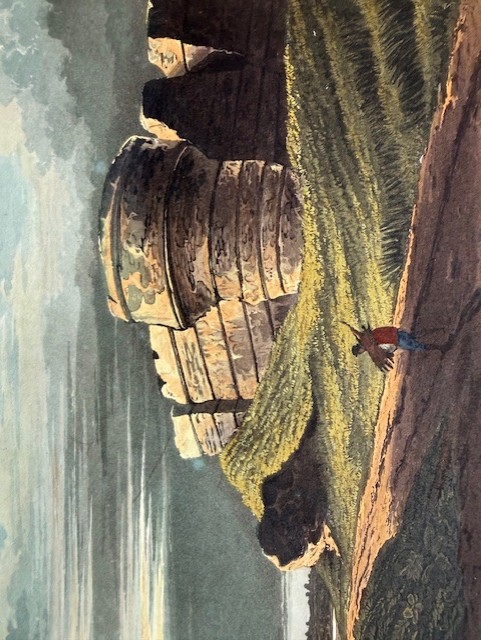
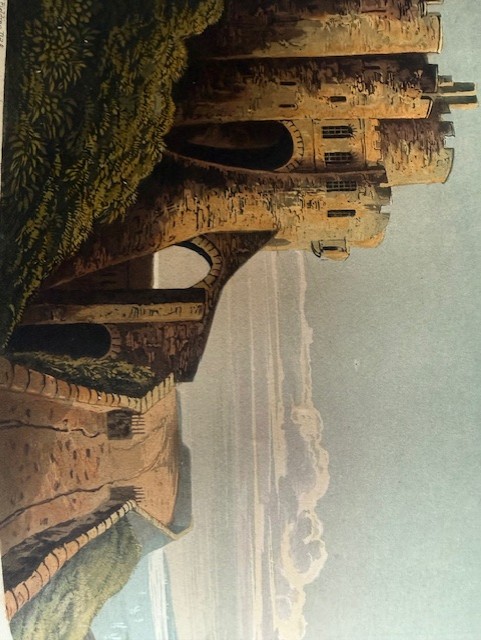
Among the most important coastal castles, Dover Castle has been successively updated and here, ten years after Waterloo, is depicted in neat good order. As late as World War II it was a strategic site. Alas, who would bet that Dover Castle will never have a strategic purpose again?
Barry Windeatt (Keeper of Rare Books)