Blog
16 March 2026

.jpg)
March and April have brought a true taste of the British spring to the gardens here at Emmanuel College. The weeks have been a lively mix of bright sunshine and passing showers - those familiar April bursts of rain that seem to arrive just as the sun has warmed the paths and lawns. While the weather can keep us on our toes, it is exactly this combination of light and moisture that brings the gardens to life at this time of year.
Across the College grounds, spring bulbs are now at their peak and nowhere is this more evident than in the spring meadows on the paddock. What was only a few months ago a quiet winter landscape has transformed into a tapestry of colour. The bulbs have begun to weave their way through the grass, creating natural drifts that shift gently in the breeze. On brighter mornings the sunlight catches the blooms beautifully, while after a passing shower the petals seem almost luminous against the fresh green growth.
Another highlight of the season can be found in the Fellows’ Garden, where the flowing drifts of daffodils are now in full display. Designed to move through the landscape in soft, sweeping lines, the planting creates a sense of movement across the lawn and beneath the trees. As the breeze passes through, the flowers sway together like a golden tide, bringing both colour and energy to this peaceful corner of the College.
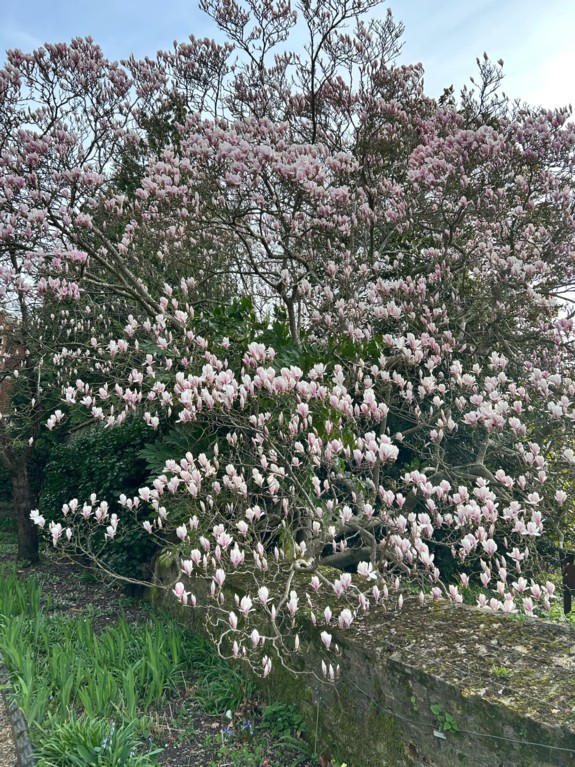
In the Jester Garden, the Magnolia soulangeana has also come into its own. At this time of year, the tree is covered in its elegant, tulip-shaped blooms, their soft shades of pink and white standing out beautifully against the still-bare branches. On sunny days the flowers seem to glow in the spring light, while after a shower they take on a delicate, almost porcelain quality. It is one of the most striking moments of the season and a favourite stopping point for many who pass through the garden.
These spring displays are the result of careful planning and planting in the autumn months, when thousands of bulbs were set into the soil with the promise of the season ahead. Seeing them emerge now - despite the shifting weather - reminds us how rewarding the rhythms of the gardening year can be.
As we move further into April, the gardens will continue to evolve. The bulbs will gradually give way to fresh growth in the borders, trees will come into leaf and the lawns will begin their steady spring growth. For now, however, it is the bulbs that take centre stage, making the most of every patch of sunlight between the showers.
If you find yourself walking through the College over the coming weeks, take a moment to enjoy the paddock meadows, the daffodil drifts in the Fellows’ Garden and the beautiful magnolia in the Jester Garden. Spring, in all its changeable glory, has truly arrived.
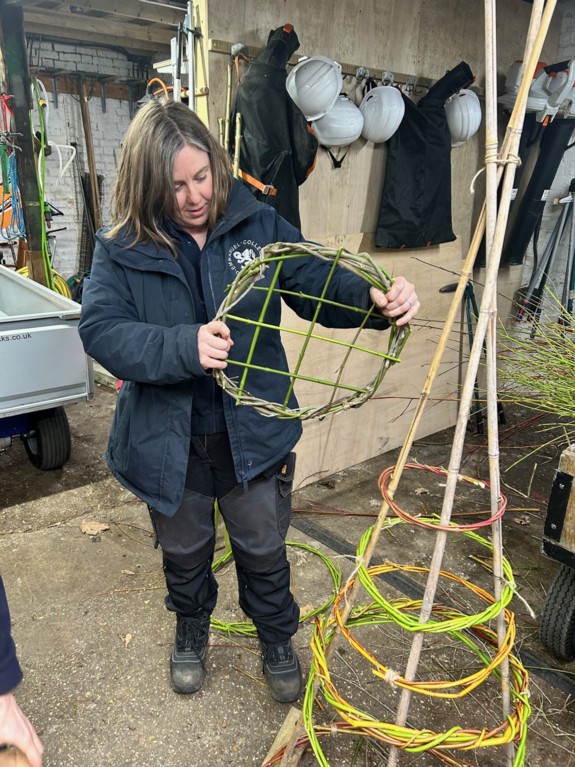
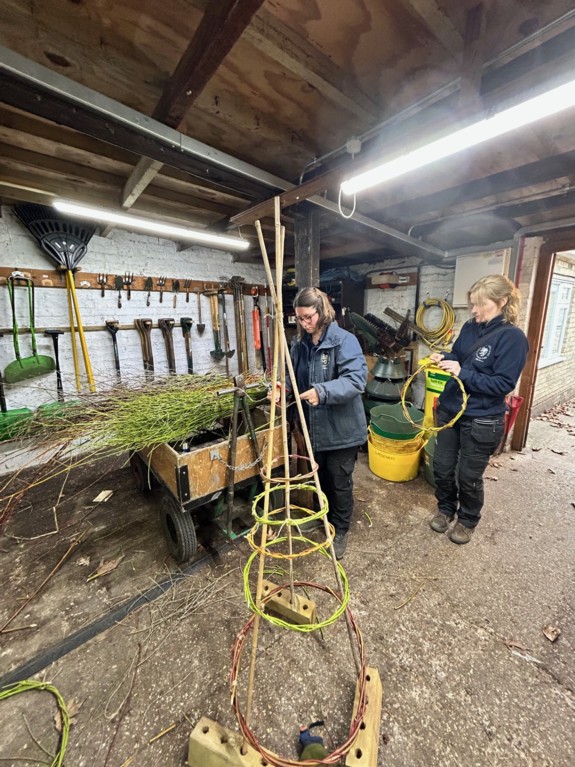
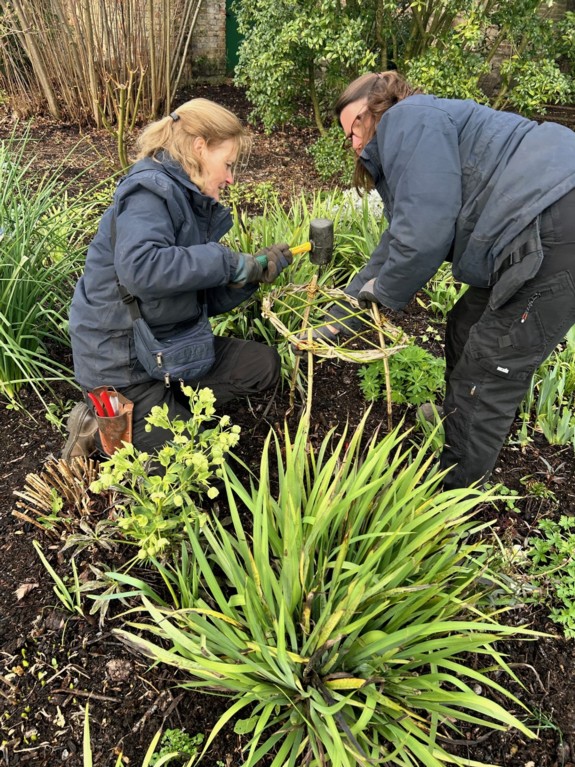
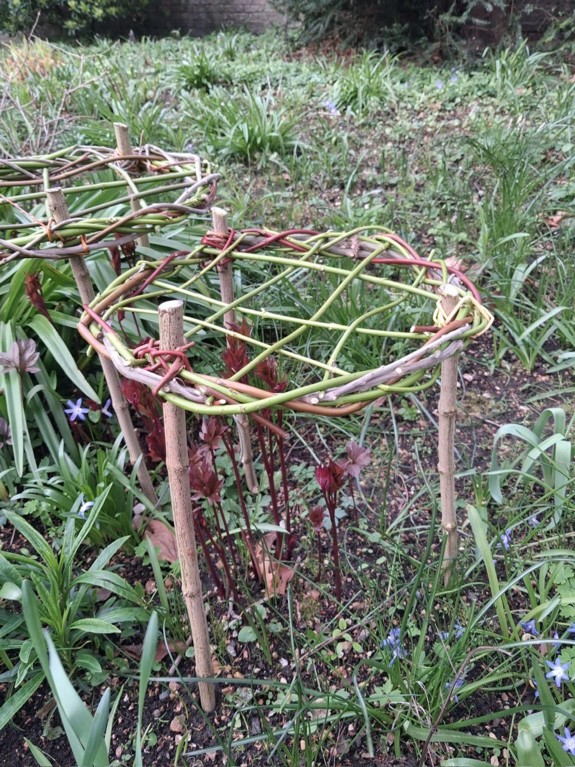
Behind the scenes, the gardening team has also been busy preparing the borders for the season ahead. As part of our ongoing efforts to garden more sustainably, we have been making good use of the material generated during winter pruning. Rather than disposing of cut stems, many have been carefully saved and repurposed as natural plant supports for the herbaceous perennials that will soon be emerging.
Stems of hazel and dogwood have proved particularly useful for this task. Their natural strength and branching structure make them ideal for creating unobtrusive frameworks that will support plants as they grow through the spring and into summer. Placed early in the season, these twiggy supports allow the perennials to grow up and through them naturally, providing stability while remaining largely hidden within the foliage.
It is a simple but effective approach that reduces waste, avoids the need for manufactured supports and blends beautifully with the natural character of the gardens. These small, thoughtful practices are an important part of how we continue to care for the College grounds while working in harmony with the environment.
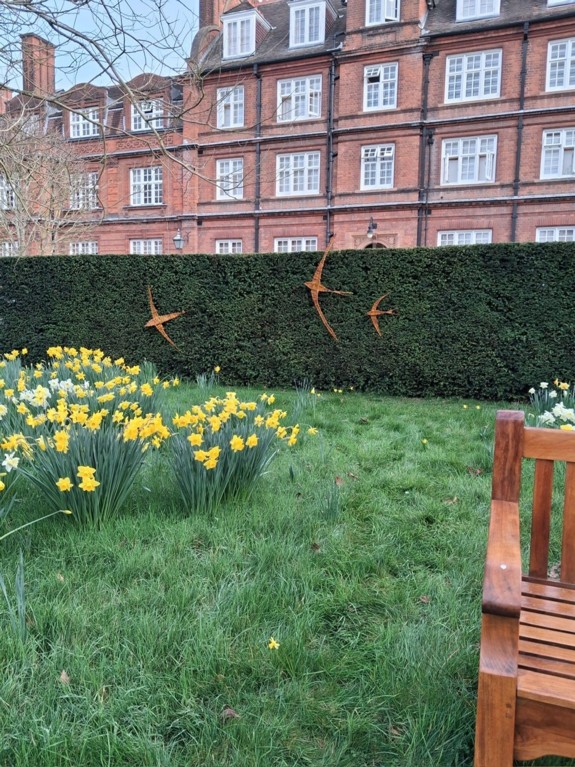
At Emmanuel College, the gardens demonstrate a thoughtful approach to integrating art within the landscape rather than imposing it upon it. One particularly striking example can be found at the bottom of the paddock, where a series of birds crafted from cut willow have been attached to the dense yew hedge. This simple yet imaginative intervention transforms a functional boundary planting into a living artwork.
The birds, made from pale, woven willow stems, stand out vividly against the deep, almost black-green backdrop of the yew. The strong contrast in colour and texture immediately draws the eye: the organic, linear quality of the willow appears light and airy against the solid, clipped mass of the hedge. Because the forms are mounted at varying heights and angles, they give the impression of movement, as though a flock has just lifted from the ground and is sweeping upward across the hedge.
This approach exemplifies how garden art can emerge directly from horticultural materials. Willow, already associated with traditional craft and rural landscape practices, feels entirely at home within the garden setting. Rather than introducing a separate sculptural object, the gardeners have used plant material itself as the artistic medium, reinforcing the sense that the installation belongs to the landscape.
The result is both playful and subtle. From a distance the shapes resolve into a dynamic pattern of flight, while closer inspection reveals the texture of the woven willow and the skill of their construction. In this way, the installation reflects a broader philosophy in the gardens at Emmanuel College: art and horticulture are not separate disciplines but can work together to animate the landscape, creating moments of surprise, movement and storytelling within the planting.
Best wishes
Brendon Sims (Head Gardener)