
Blog
16 April 2026

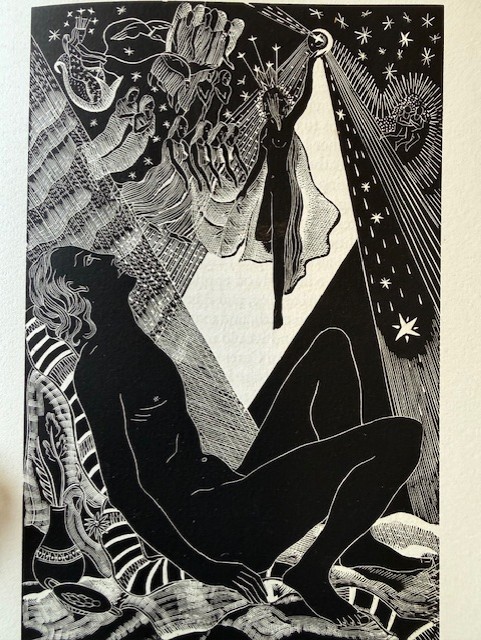
Plate 1. 'Leander's Vision', from 'Hero and Leander' (by Christopher Marlowe, completed by George Chapman; edition illustrated by Lettice Sandford; The Golden Hours Press, 1933).
Emmanuel is fortunate to have – on long loan from the late Mr Charles Nugent and his family – a comprehensive collection of the published works of Lettice Sandford (1902-1993), who worked as a gifted wood-engraver in the 1930s and 1940s.
Lettice Sandford (nee Rate) grew up in comfortable circumstances at Milton Court, a seventeenth-century house on the outskirts of Dorking that had been substantially reworked by the Victorian architect William Burges for Lettice’s father, a wealthy lawyer, banker and philanthropist – the house survives as the offices of a health insurance company. Lettice studied at the Byam Shaw and Vivat Cole School of Art and then studied book illustration at the Chelsea Polytechnic, where she was taught etching by Graham Sutherland. In 1929 she married Christopher Sandford, a book designer from an Anglo-Irish background who would become a founding director of the Folio Society.
Together they started the Boar’s Head Press in Devon, a private press that published some of Lettice’s early wood-engraving work, starting in 1932 with her illustrations for an edition and translation of the poems of the Ancient Greek poetess, Sappho of Lesbos.
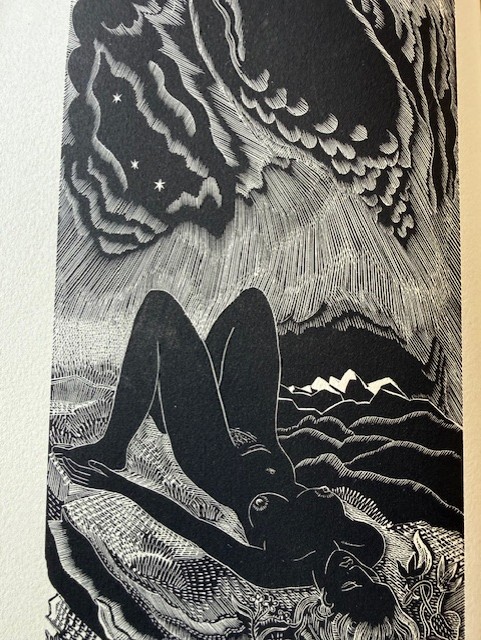
Plate 2. 'Sappho,' illustrated by Lettice Sandford (Boar's Head Press, 1932): 'The moon has set, and the Pleiades; it is midnight, the time is going by, and I lie alone'.
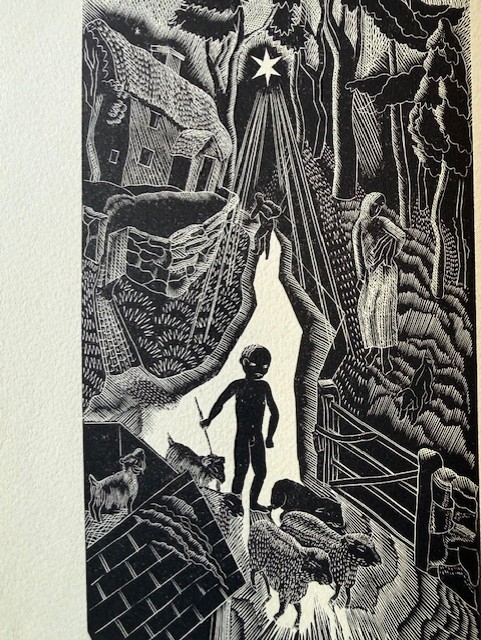
Plate 3. 'Sappho': 'Evening, that bringest all that bright morning scattered, then bringest the sheep, the goat and, back to its mother, the child ...'
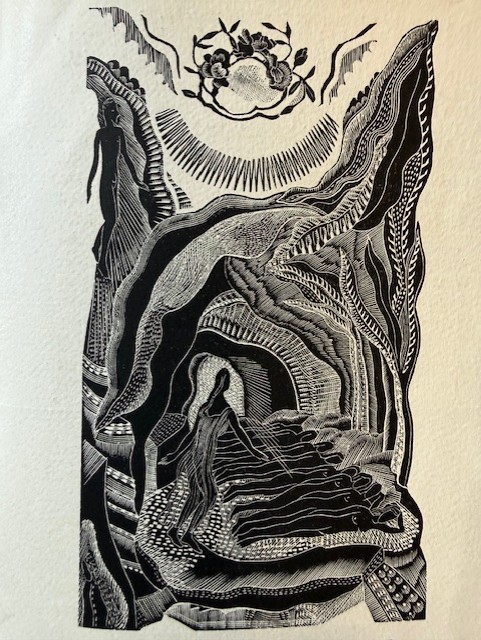
Plate 4. 'Sappho': 'But thou shalt ever lie dead, nor shall there be any remembrance of thee then or ever ... but thou shalt wander unnoticed ... flitting among the shadowy dead ... '
Here she established her trademark deployment of very fine white lines incised into black, or vice versa, in images of exceptional fineness of detail. This is on display in her illustrations for the Boar’s Head edition of Thalamos (1932), ‘or The Brydall Boure, being the Epithalamion and Prothalamion of Edmund Spenser’.
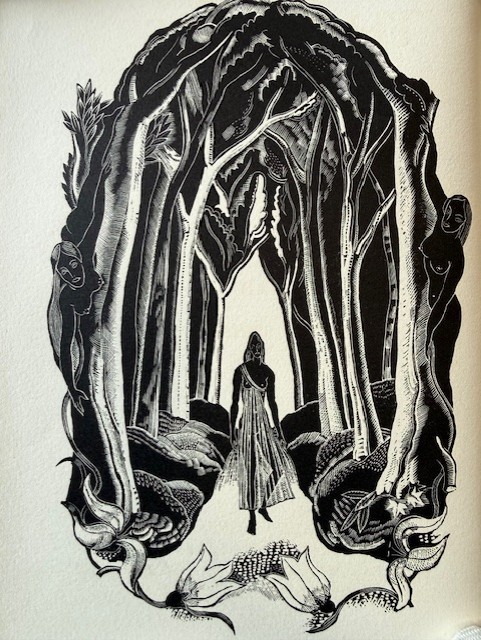
Plate 5. Frontispiece to 'Thalamos' (Boar's Head Press, 1932).
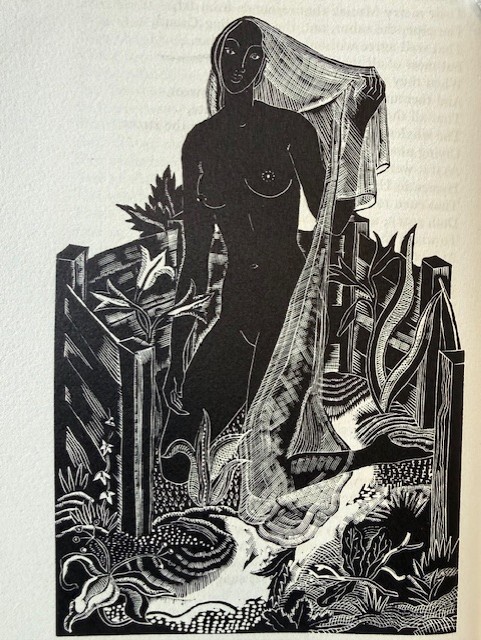
Plate 6. 'Thalomos': 'Tell me, ye merchants' daughters, did ye see / So faire a creature in your towne before?'
Also in 1932 the Boar’s Head Press published The Virgin by Marius Lyle, a kind of fictive alternative history of the Virgin Mary, for which Lettice provided a bold frontispiece illustration.
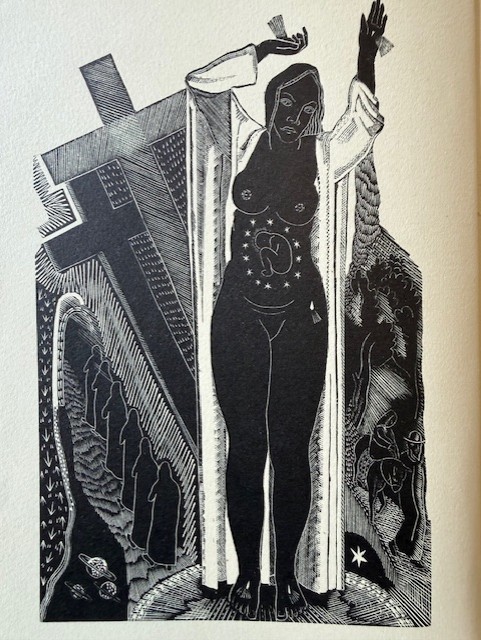
Plate 7. Frontispiece to Marius Lyle, 'The Virgin' (Boar's Head Press, 1932).
Her Sappho and Virgin Mary show the beginnings of an identification with exceptional women that seems to run through Sandford’s work, and which is again to be seen in her striking engraving for Salome before the Head of St John (1933), a poem by N. Morland and Peggy Barwell, published by the Boar’s Head as a pamphlet. The looming figure of Salome, fixating on the saint’s severed head, dominates the composition, with its juxtaposed subsidiary images including Salome’s frenzied dance and Christ as the Man of Sorrows.
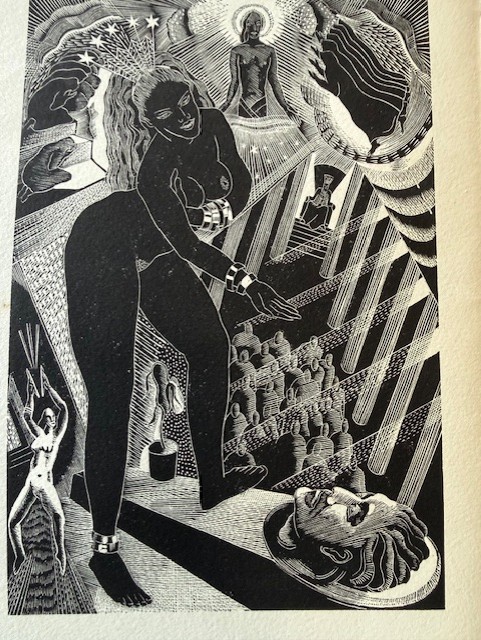
Plate 8. 'Salome before the Head of St John' (Boar's Head Press, 1933).
In 1933 Lettice provided a striking two-page frontispiece for a Boar’s Head edition of Dreams and Life by Gerard de Nerval: ‘an attempt by a poet and a genius, suffering from intermittent periods of insanity, to describe his sensations during those periods’.
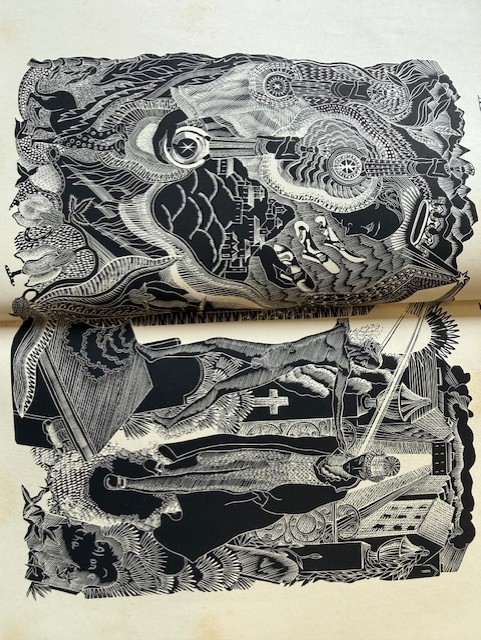
Plate 9. Frontispiece to Gerard de Nerval, 'Death and Life' (Boar's Head Press, 1933).
In the same productive year Lettice designed the illustrations for a Boar’s Head edition of Christopher Marlowe’s poem Hero and Leander, with a compelling frontispiece and images of the drowning Leander.
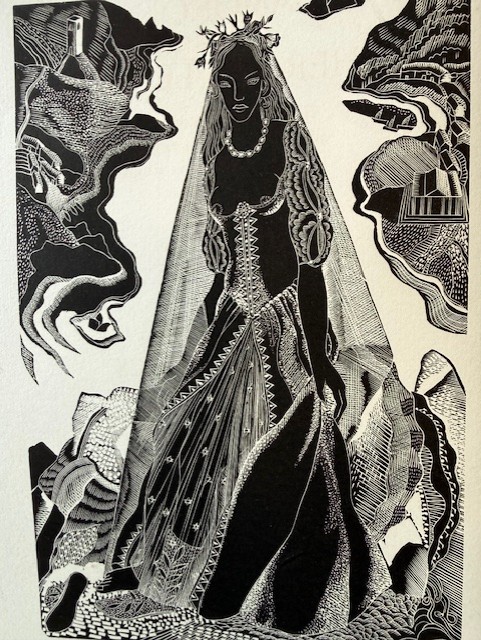
Plate 10. Frontispiece to 'Hero and Leander' (1933).
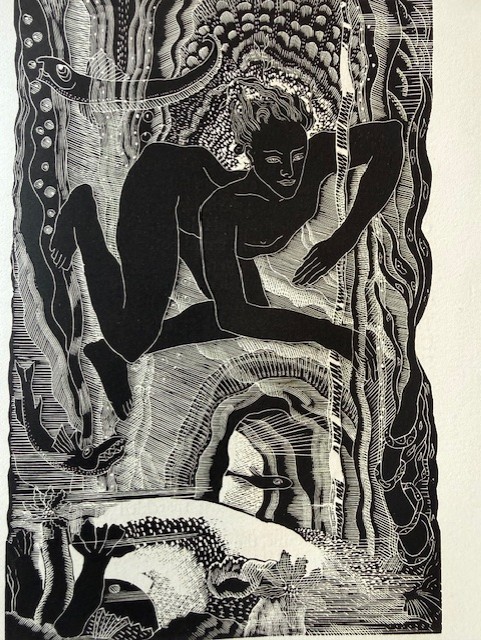
Plate 11. 'Hero and Leander': Leander sinks down in the sea.
The volume also illustrates Marlowe’s poem The Passionate Shepherd to His Love.
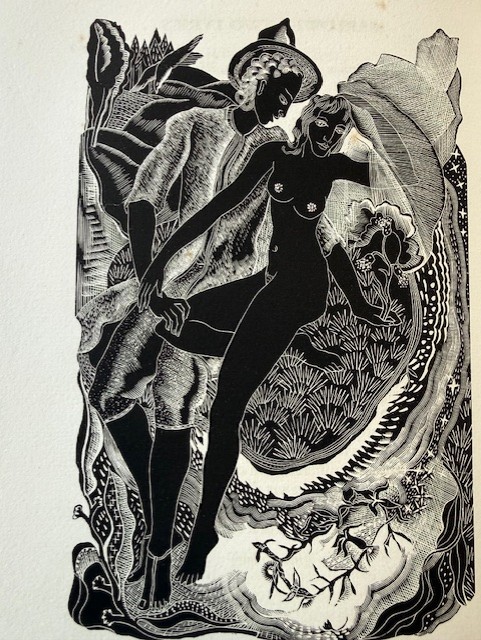
Plate 12. Christopher Marlowe, 'The Passionate Shepherd to his Love' (illustrated by Sandford along with 'Hero and Leander'): 'Come live with me and be my love'.
Some of these Boar’s Head editions were issued in bindings that are themselves works of art and things of beauty.
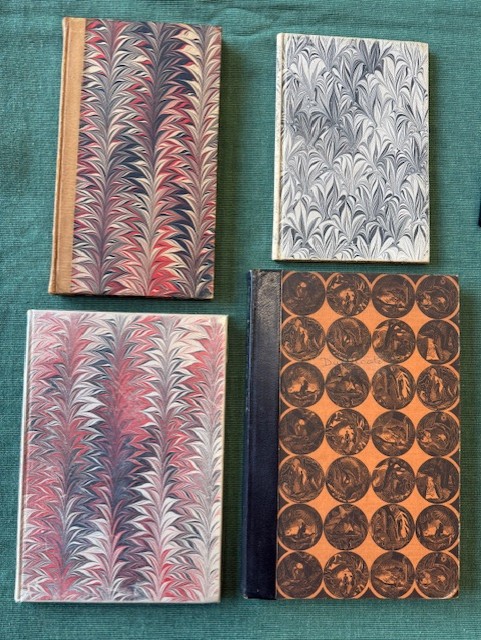
Plate 13. Some bindings, The Boar's Head Press editions.
Meanwhile in 1933 Christopher Sandford became the proprietor of the distinguished private press, The Golden Cockerel Press, and so Lettice began to publish her work with that press, beginning with a translation of Cupid and Psyche (1934).
The theme of unconventional women returns in Lettice’s engraved illustrations for the Golden Cockerel edition of The Golden Book of Kydno (1935). This is presented as the English translation from Modern Greek of a work of Lesbian literature from around 1900. Lettice’s illustrations no doubt seemed rather naughtier in 1935. By now, Matisse is an influence.
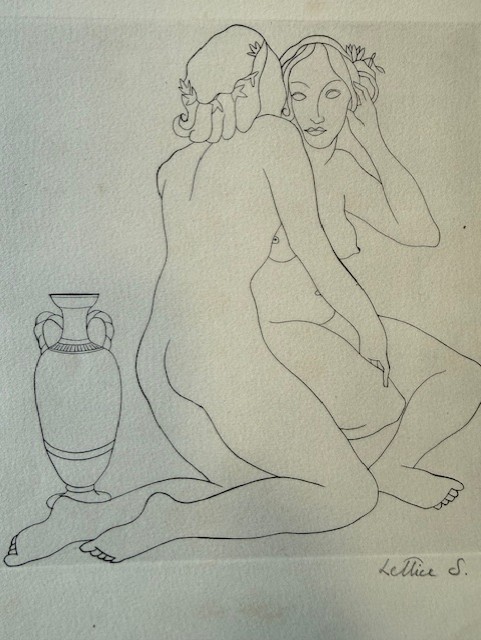
Plate 14. 'The Golden Book of Kydno', supposedly 'translated from the Modern Greek of Evadne Lascaris'; illustrated by Lettice Sandford (Golden Cockerel Press, 1935): 'Had dead and eternal Sappho seen you as I have seen, pale Palmyra, bathed in the green moonlight of the sea, no fire would have dared to burn the song born there like Venus'.
The following year the Golden Cockerel Press brought out an ambitious edition in a large format of the Old Testament book, The Song of Songs (1935). Lettice’s engravings illustrate a facing page of biblical text in splendid typography.
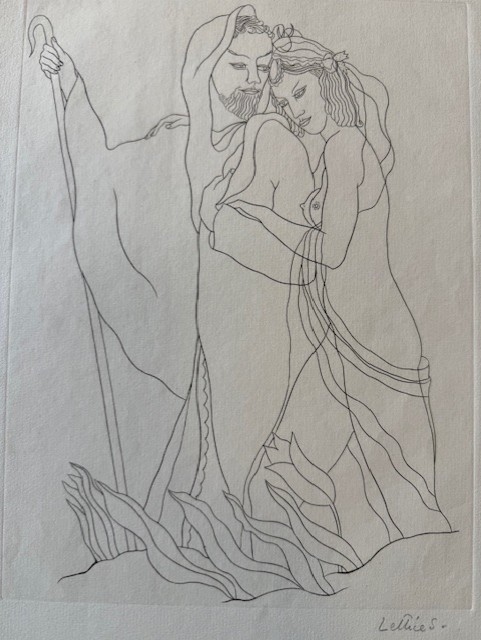
Plate 15. 'The Song of Songs', illustrated by Lettice Sandford (Golden Cockerel Press, 1936): illustration to the verses beginning 'I am black but comely, O ye daughters of Jerusalem' and ending 'A bundle of myrrh is my well-beloved unto me; he shall lie all night betwixt my breasts'.
On one level, the Song of Songs is a Hebrew erotic poem, and it is perhaps not altogether surprising that Golden Cockerel subscribers could also purchase extra sets of the engravings to the Golden Book and the Song of Songs as loose copies each signed by the artist, and these came in a discreet sleeve.
Lettice Sandford continued to illustrate books for the Golden Cockerel and other presses until 1953. But for the next four decades of her long life she turned to other interests, becoming a pioneer in the revival of interest in corn dollies (traditional straw craft items) and moving on to an interest in working in watercolour. The College is lucky to be able to enjoy examples of her wood-engravings during a heyday of British book illustration.
Barry Windeatt (Keeper of Rare Books)
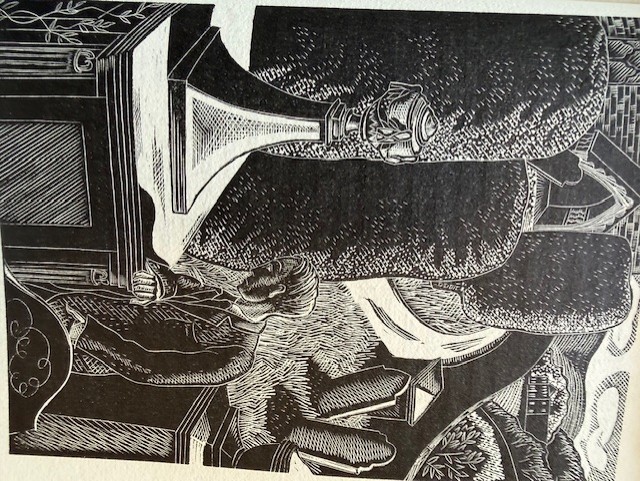
Plate 16. An illustration by Sandford to Christopher Whitfield, 'Lady from Yesterday' (Golden Cockerel Press, 1939): the narrator reflects by a tomb in a country churchyard.