
Blog
13 May 2026

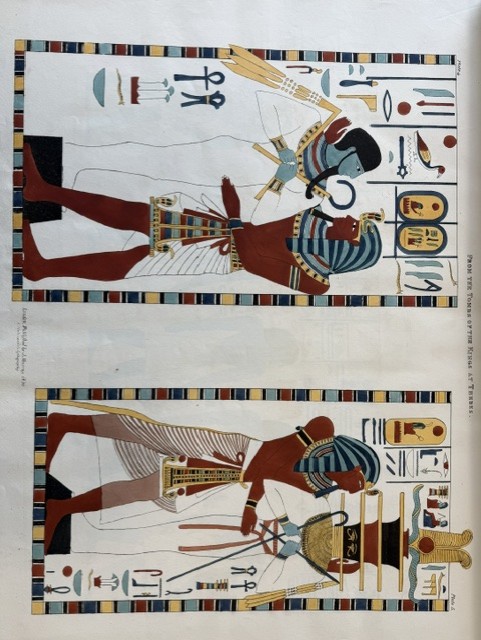
Plate 1. Giovanni Belzoni, 'Narrative': 'From the Tombs of the Kings at Thebes'.
Archaeology is a wonderful subject for television – the suspense of the search, the astonishing reveal – and the wide public interest this now arouses has promoted careers for various celebrity archaeologists. Among Emmanuel’s collection of illustrated books is one recording the work of an early celebrity archaeologist: Giovanni Battista Belzoni’s Narrative of the Operations and Recent Discoveries within the Pyramids, Temples, Tombs and Excavations in Egypt and Nubia (1821).
Belzoni’s CV, however, was somewhat more eclectic than your average academic TV archaeologist, and he is believed to be among the inspirations for Indiana Jones, the intrepid archaeologist hero in the Spielberg films. Born into a poor barber’s family in Padua he was initially a barber before – after an unhappy teenage love affair – entering a Capuchin monastery as a would-be monk, while simultaneously studying hydraulic engineering. When Napoleon invaded Italy Belzoni fled abroad, arriving in London in 1803 where he became a British subject, married, and launched a new career as a circus strongman. At six feet seven inches tall and under the stage name of ‘The Patagonian Samson’ he wowed audiences at Sadler’s Wells, lifting and carrying round the stage an iron frame on which twelve men sat. His wife – reportedly a matchingly substantial figure – took part in performances. After touring his strongman act to Portugal, Spain, Sicily and Malta, Belzoni turned up in Egypt, unsuccessfully petitioning the Pasha, Muhammad Ali, for employment as a hydraulic engineer.
But with funds from the British Consul, Sir Henry Salt, Belzoni set off in 1816 to explore the possibility of moving to Britain a colossal carved head that lay half buried in the desert sands.
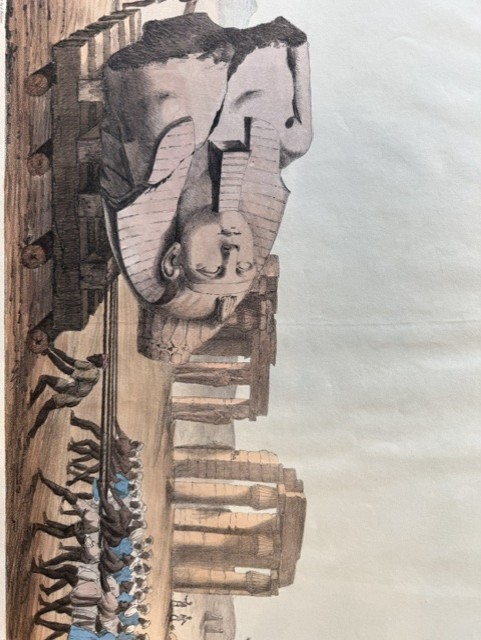
Plate 2. 'Mode in which the Young Memnon's Head ... was removed by G. Belzoni'.
This head of Ramesses II, often called the Younger Memnon, weighed over seven tons. It took 130 men seventeen days to move it on rollers a short distance to the Nile, ready to be shipped to London, where it remains in the British Museum and was the inspiration for Shelley’s poem ‘Ozymandias’.
Belzoni then proceeded to the temples at Abu Simbel, where only the tops of the four 20-metre-high statues of Ramesses II were still visible above the drifted sands.
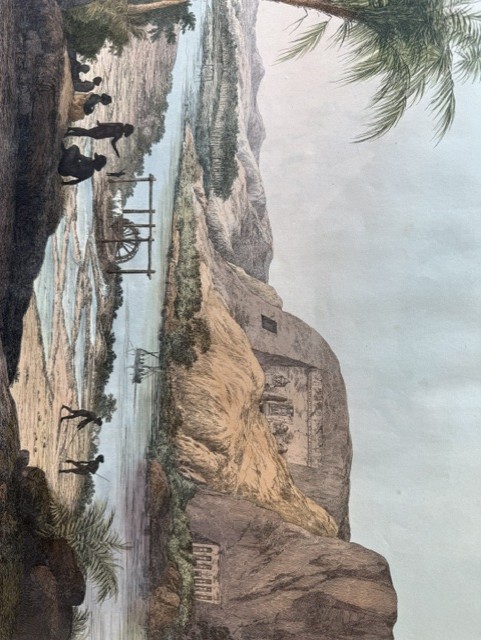
Plate 3. 'Exterior View of the Two Temples at Abu Simbel'. (Temples just visible on the far bank).
Unable to enter the temples Belzoni proceeded to Philae.
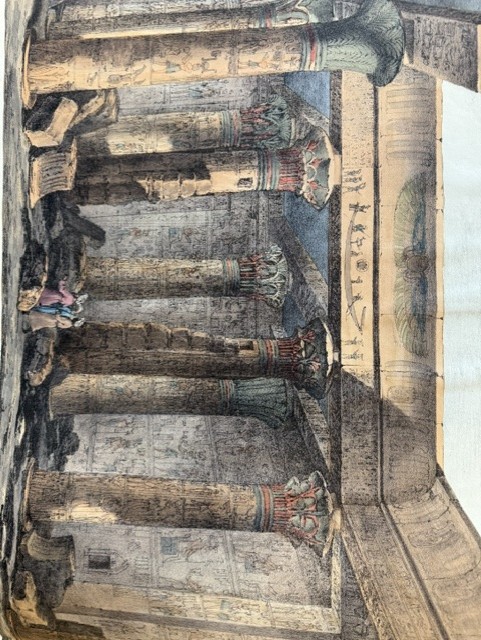
Plate 4. 'Interior of the Temple in the Isle of Philae'.
Belzoni also excavated at Karnak in Luxor.
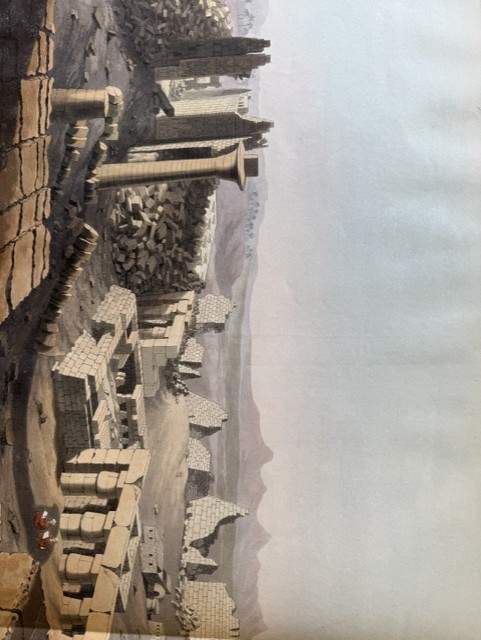
Plate 5. 'General View of the Ruins of the Great Temple at Karnak'.
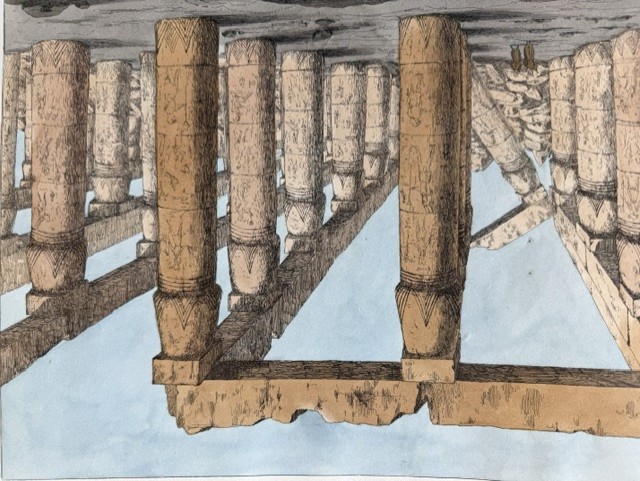
Plate 6. 'The Temple at Karnak'.
It was at Karnak that Belzoni discovered the red granite sarcophagus of Ramesses III – the carved lid is now in the Fitzwilliam Museum, which also holds a striking portrait of Belzoni in Middle Eastern garb. Later, Belzoni succeeded in uncovering the façade and entering the Abu Simbel Great Temple, long looted but with splendid decorations.
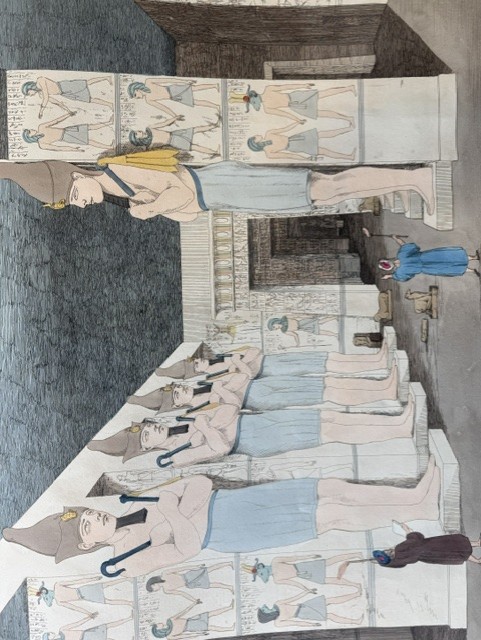
Plate 7. 'Interior of the Temple at Abu Simbel in Nubia'.
In the Valley of the Kings in 1817 Belzoni discovered the intact tomb of Seti I, father of Ramesses II, with its remarkable bas-reliefs and frescoes. (The sarcophagus is now in the Sir John Soane Museum). After returning to Cairo and borrowing the necessary funding, Belzoni then discovered the entrance to the second tallest pyramid at Giza, the Pyramid of Khafre.
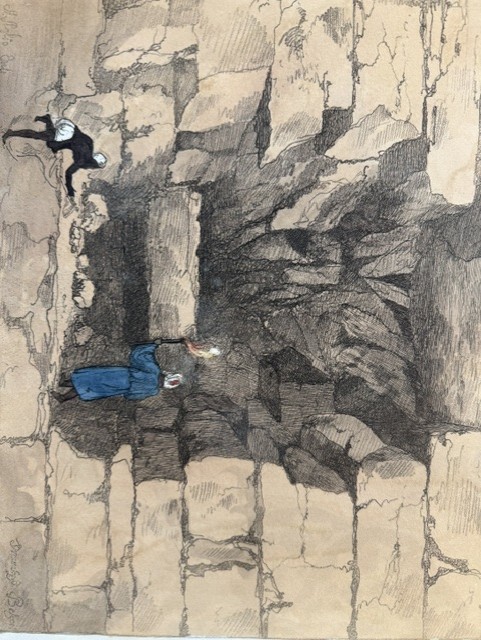
Plate 8. 'Forced Passage into the Second Pyramid of Giza, discovered by G. Belzoni'.
Other excavations took place at Kom Ombo and at Erment.
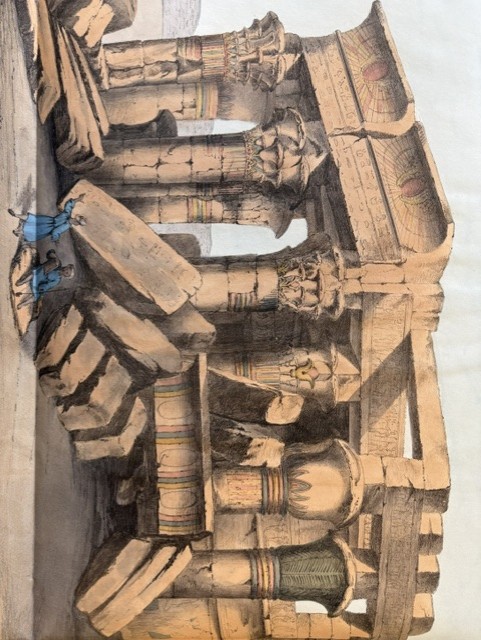
Plate 9. 'Ruins of Kom Ombo'.
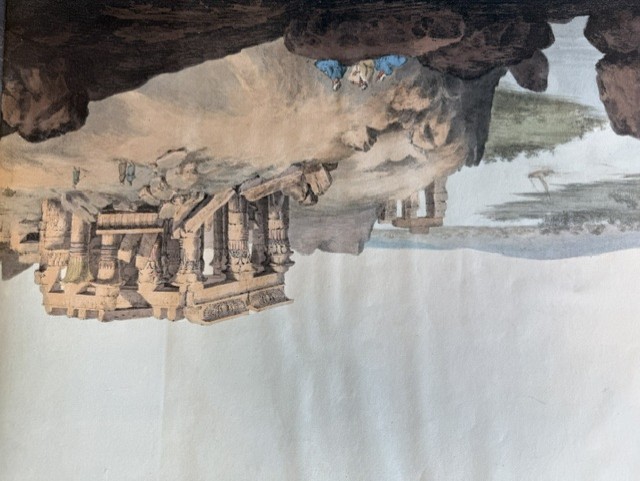
Plate 10. 'Ruins of Kom Ombo and Adjacent Country, Drawn from Nature by G. Belzoni'.
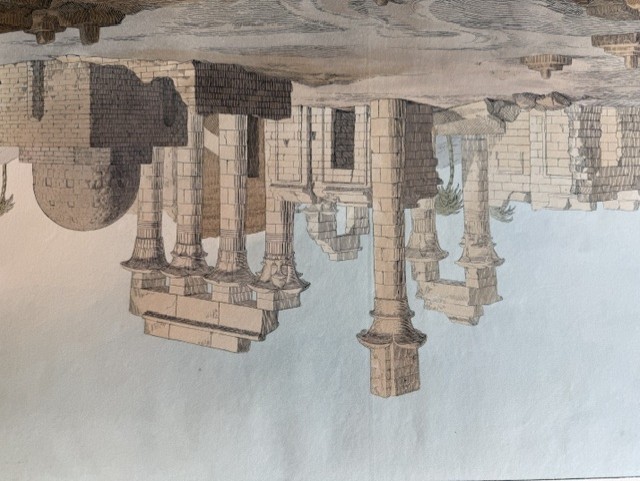
Plate 11. 'Temple at Erment'.
However, subsequent excavations in Thebes were blocked, because Salt had purchased sole rights to excavate, so excluding Belzoni (who in his dealings with the British establishment often felt slighted for not being ‘a gentleman’). Nothing daunted, Belzoni instead crossed deserts to locate the fabled ancient port city of Berenice on the Red Sea.
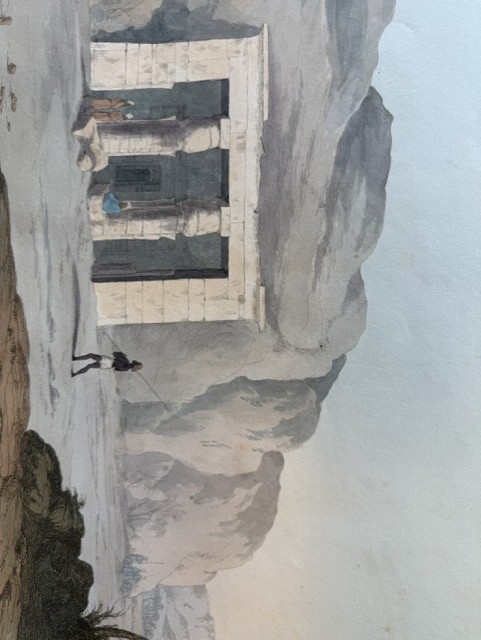
Plate 12. 'Temple on the Road to Berenice on the Red Sea'.
Returning to London in 1820, Belzoni hired the Egyptian Hall in Picadilly to exhibit his reconstruction of the tomb of Seti, and published his Narrative, with a separate volume of plates etched after drawings by Belzoni. Many of the plates were printed by lithography, making Belzoni’s the first significant publication produced by this new technology. The vividly-coloured illustrations of tomb and temple decorations fuelled the contemporary craze for the Egyptian taste.
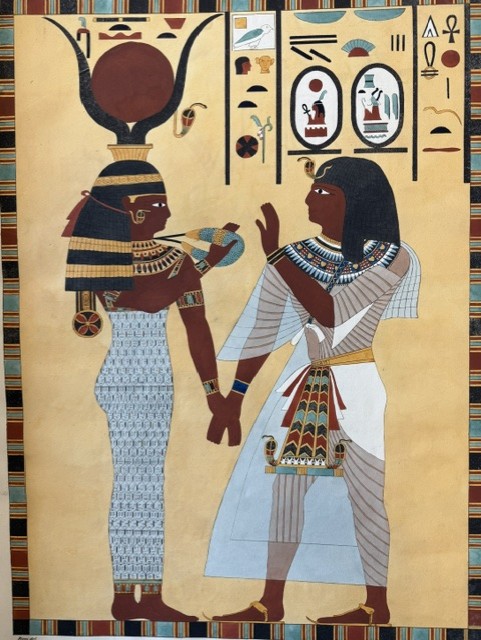
Plate 13. 'From the Tombs of the Kings at Thebes'.
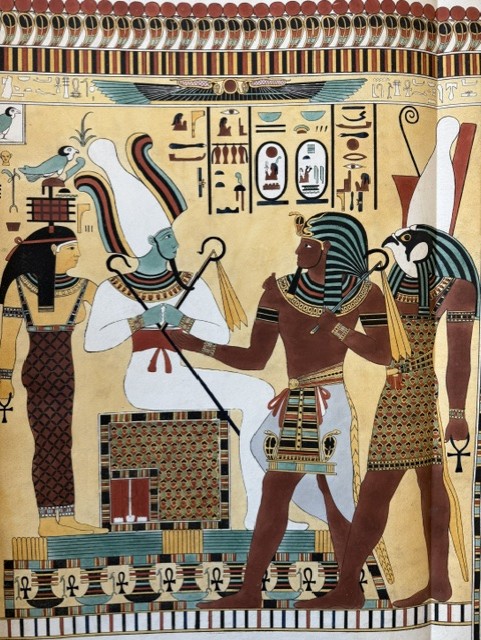
Plate 14. 'From the Tombs of the Kings at Thebes'.
In 1823 Belzoni set off on an expedition to discover the source of the Niger and to visit Timbuktu. But like the earlier Scottish explorer Mungo Park, who pursued the same quest, Belzoni succumbed to illness and died at a location now in modern Nigeria. Belzoni’s methods can give modern archaeologists the shudders, but Howard Carter, the discoverer of the Tutankhamun tomb, praised him generously as the pioneer that he was.
Barry Windeatt (Keeper of Rare Books)